Estrie Chapter Officially Launches
With a Conference on the New Obligations Facing Syndicates of Co-Ownership

News
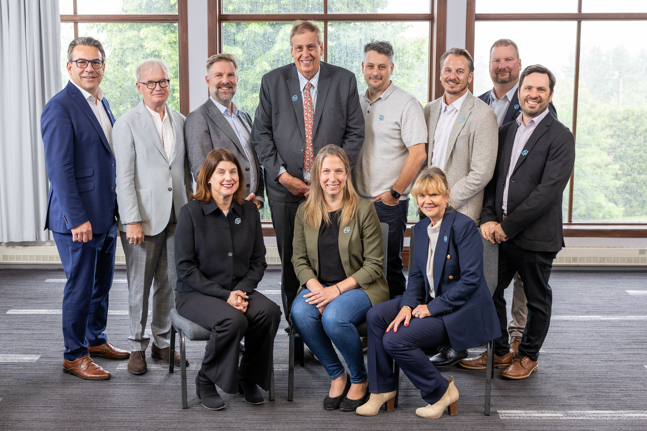
A few months after its creation, the RGCQ's Estrie Chapter officially launched on June 19 in Orford. Bringing together co-owners, managers, and industry professionals, the event provided an opportunity to discuss the new obligations facing syndicates of co-ownership in a context shaped by the coming into force of the regulatory provisions stemming from Bill 16.
This official launch marks an important milestone in the development of the RGCQ in the Estrie region. In addition to providing co-owners and managers with a new forum for networking and knowledge sharing, the chapter will help promote the dissemination of information and best practices in a sector undergoing significant transformation.
A Launch Focused on Regional Collaboration
The day began with welcoming remarks from Me Yves Joli-Cœur, Provincial President of the RGCQ, and Me Alexandre Dumas, President of the newly established RGCQ Estrie Chapter. Both emphasized the importance of strengthening the organization's presence in the regions and creating opportunities for discussion tailored to the realities of co-ownerships in Estrie.
The creation of this new chapter reflects the RGCQ's commitment to remaining close to its members and addressing the specific challenges faced by directors, co-owners, and managers throughout the region.
Experts Gathered to Discuss the Challenges of Bill 16
For this conference, the Estrie Chapter brought together several recognized experts from the co-ownership sector to provide participants with legal, operational, and practical perspectives on the changes currently underway.
Presentations were delivered by Me Michel Paradis, Vice-President of the Provincial RGCQ and President of the Québec Chapter, and Julien Gobeil Simard, President and Co-Founder of Hoodi.ai. Together, they presented the main changes introduced by Bill 16 and their impact on the day-to-day management of syndicates of co-ownership.
The conference also featured Hugues Ouellette, Director of Financial and Technical Management at Proximmo, and Francine Poirier, Real Estate Broker at RE/MAX, who shared their field observations regarding the practical impacts of these new obligations on real estate transactions, building management, and the value of co-ownership properties.
Tools That Have Become Essential
At the heart of the discussions were three elements that have now become essential to the governance of Québec co-ownerships: the maintenance logbook, the contingency fund study, and the Certificate Attesting to the Condition of the Immovable Held in Co-Ownership (CACI).
The speakers emphasized that these new obligations should not be viewed as mere administrative formalities, but rather as tools that help ensure better planning of building maintenance, adequate funding of contingency funds, and greater transparency during real estate transactions.
Discussions focused in particular on compliance deadlines, directors' responsibilities, the importance of maintaining complete documentation, and the consequences that inadequate planning can have on the financial health of syndicates.
One message was repeated throughout the day: syndicates should begin taking the necessary steps now rather than waiting until the 2028 deadline. Speakers noted that demand for the professionals responsible for preparing maintenance logbooks and contingency fund studies will continue to increase in the coming years, potentially leading to longer delays and higher costs for syndicates that postpone action.
Concerns Shared by Co-Ownerships of All Sizes
The discussions also demonstrated that the challenges associated with implementing Bill 16 are not limited to large co-ownerships.
Whether small or large, many co-ownerships share the same concerns: the quality of existing records, the difficulty of tracing the history of completed work, financing major repairs to come, and preparing the new certificates required for real estate transactions.
Speakers stressed that a well-documented and well-planned co-ownership benefits not only from better long-term management, but also from a competitive advantage when units are sold. Conversely, documentation deficiencies or chronic underfunding can now have a direct impact on a property's market value and on the smooth completion of transactions.
A Valuable Forum for Discussion
Beyond the content of the presentations, the event also served as an important meeting place for co-owners and managers from across the region.
Participants had the opportunity to ask questions of the experts present, discuss their respective realities, and share experiences with other stakeholders in the sector. These discussions highlighted both the common concerns facing the industry and the growing interest in the new management tools made mandatory under Bill 16.
This spirit of collaboration and knowledge sharing is, in fact, one of the primary purposes of the new Estrie Chapter, which intends to continue organizing activities that allow members to connect, stay informed, and expand their professional networks.
A Promising First Step
The official launch of the Estrie Chapter demonstrates the industry's interest in a stronger regional presence for the RGCQ. At a time when syndicates of co-ownership are navigating one of the most significant reforms the sector has experienced in decades, the discussions held in Orford highlighted the importance of having access to a strong regional network and training opportunities adapted to on-the-ground realities.
This first official activity sets the tone for the initiatives the Estrie Chapter hopes to implement in the coming years to support co-owners, directors, and managers as they face the many challenges ahead.
Login to view this content
Become a member
Access all our services and a vast network of experts by becoming a member of the RGCQ.